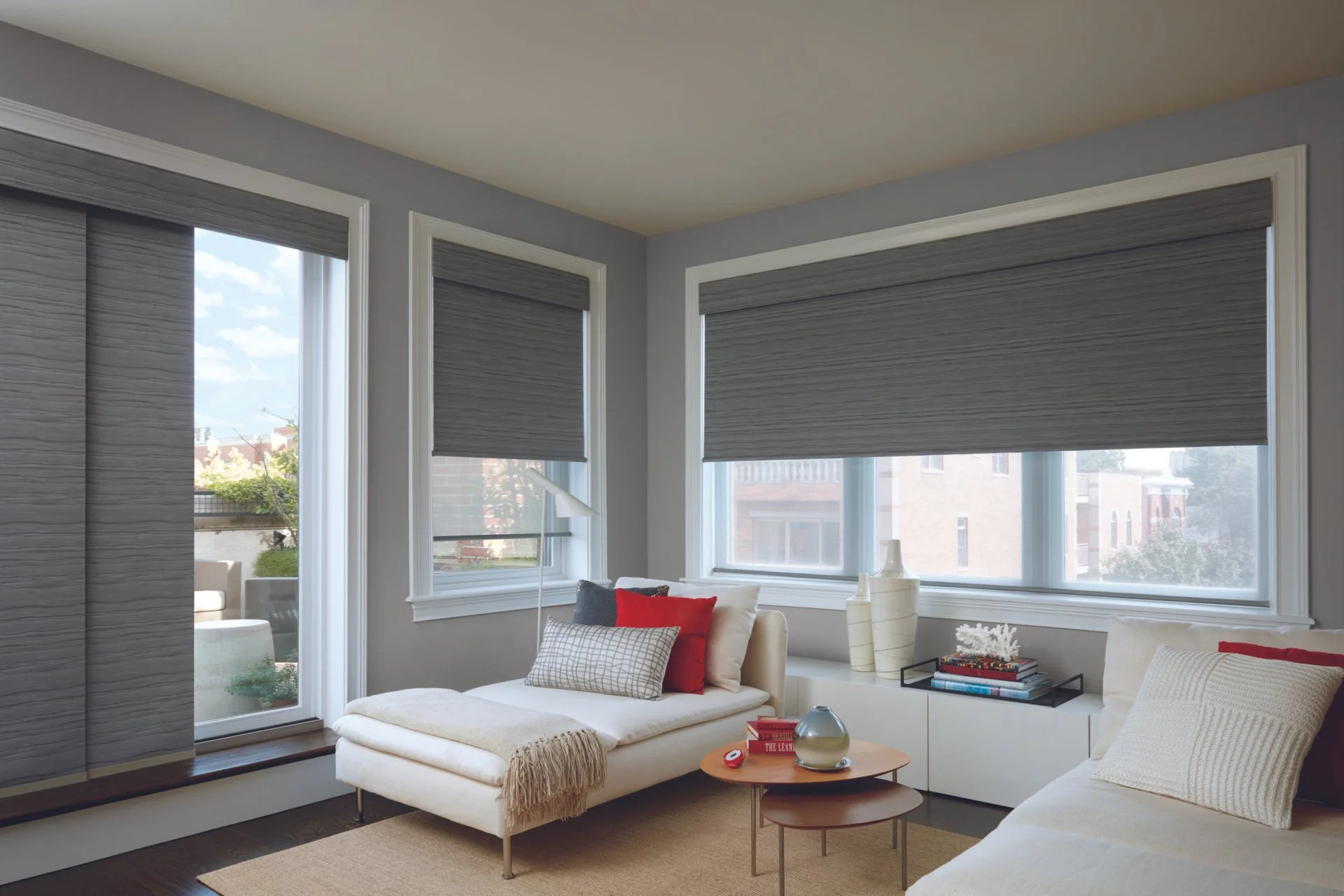
Roller Shades
Modern Style, Effortless Privacy
Learn More about Roller Shades
Why Roller shades?
1
Sleek, modern aesthetic — minimalist flat fabric design that rolls neatly into a compact cassette for a clean, uncluttered look that suits almost any decor style
Superior light control — options range from sheer/light-filtering (soft diffusion) to room-darkening and true blackout fabrics for precise control over brightness and darkness
Excellent UV protection — blocks harmful rays to help prevent fading of furniture, floors, rugs, and artwork
Energy efficiency — helps regulate indoor temperatures by blocking summer heat and retaining winter warmth, potentially lowering heating/cooling costs
Strong privacy — opaque and blackout fabrics provide complete privacy at night while sheer options allow daytime light without full exposure
Low maintenance — simple, flat surface resists dust buildup and is easy to clean (dust, vacuum, or spot-clean; many wipe clean easily)
Space-saving design — when raised, they disappear almost completely, maximizing views and making rooms feel larger — ideal for large windows, sliding doors, and skylights
Affordable & highly customizable — generally more budget-friendly than heavy drapes or traditional blinds, with endless choices in colors, textures, opacities, and modern features like motorization and cordless operation
What rooms can use roller shades?
2
Living room — Offer a sleek, modern appearance with flexible light control for daytime relaxation or cozy evenings
Bedroom — Especially ideal with blackout fabrics for total darkness, promoting better sleep for light-sensitive individuals or shift workers
Sliding glass doors & patios — Perfect for large glass areas, providing privacy, UV protection, and easy operation without blocking the view when raised
Kitchen — Low-maintenance and easy-to-clean fabrics resist moisture and grease; great for controlling light over sinks or breakfast areas
Home office — Adjustable light filtering reduces screen glare while maintaining a professional, clutter-free look
best qualities of roller shades
3
Clean Contemporary Style — Sleek, flat fabric that rolls into a slim cassette for a minimalist look
Precise Light Management — Sheer to blackout options for total control of light and mood
UV & Fade Protection — Shields furniture, floors, and art from damaging sun rays
Reliable Privacy — Full blackout at night; sheer fabrics for daytime light without exposure
Effortless Maintenance — Smooth surface resists dust and wipes clean easily
Maximum Space & Views — Vanishes when raised, opening up windows and rooms
Fully Customizable — Endless colors, textures, plus cordless and motorized choices
Great Value & Efficiency — Affordable option that helps reduce energy costs
what kind of materials are made from roller shades and how do i clean them?
4
Polyester (most popular) — Often used for light-filtering, blackout, or solar/screen fabrics; durable, wrinkle-resistant, and available in many opacities
Vinyl/PVC-coated fabrics — Waterproof and slick; common for blackout or basic shades, especially in kitchens/bathrooms
Fiberglass (often PVC-coated) — Used in solar screens and some blackout options for strength and heat/glare reduction
Natural fibers (e.g., bamboo, jute, cotton blends) — Eco-friendly choices for a textured, organic look
Specialty blends (e.g., recycled polyester, voile/sheer) — For sheer/translucent effects or sustainable options
How to Clean Roller Shades
General maintenance (all types) — Dust regularly with a feather duster, microfiber cloth, or vacuum with a soft brush attachment (lower the shade fully and support from behind to avoid creasing)
Fabric/polyester shades — Stick to dry methods; vacuum gently or spot-clean stains with a mild detergent on a damp cloth (test first in a hidden spot); avoid soaking or submerging — air dry fully lowered
Vinyl/PVC shades — Wipe with a damp cloth and mild soap/water; they're waterproof and easy to spot-clean; rinse and air dry lowered
Solar/screen shades — Use similar gentle wiping or vacuuming; avoid harsh scrubbing to protect the weave
Tips — Always check manufacturer instructions first; never use bleach, harsh chemicals, or immerse in water (can damage mechanisms or fabric); for tough stains, consider professional cleaning